Backlinks are still among the most potent ranking factors in SEO, but not all links will work in your favor. The truth is that through a slow but sure process, link quality can gradually lower your search visibility or lead you to be in the group of toxic links. Therefore, it is essential to learn the techniques of a backlink audit for your site in order not to get caught up in the bad practices of SEO. A backlink audit gives you the power to understand the precise reasons for websites linking to yours, the strength or weakness of these links, and their effect on your rankings.
Search engines to rank pages consider link quality, relevancy, and trustworthiness. A wrong SEO backlink audit can lead to a website having a lot of spamming or manipulative links without the website being aware of it, and thus getting penalized by the algorithms. Regular audits allow the owners of the site to detect the risks at an early stage and take the necessary measures before their ranking goes down.
Thorough backlink analysis, while emphasizing risk, also uncovers areas of potential growth. By analyzing your best links, the strategies that were successful can be easily duplicated and thus your authority enhanced. Moreover, a comprehensive audit of your website’s link profile reveals the competitors’ weaknesses and sets the industry benchmarks.
This guide will present you with a step-by-step method to perform a backlink audit that is very clear and efficient, not only helping you save your site but also adding to your stronger, more sustainable SEO strategy.
Understanding the Purpose of a Backlink Audit for Your Site
Your website had good backlink audits as a means to protect the search visibility from any upcoming threats and also increase the authority. Backlinks are considered by search engines to be the indicators of a company that is trustworthy, finding relevant, and being recognized by the site. Links from bad-quality or unrelated places can lead to lower rankings and thus, the website will be less visible.
Carrying out a backlink audit for your site regularly not only keeps you updated but also brings to light unnatural patterns. A sudden increase in the number of links, the use of excessive keyword-rich anchors, or links coming from spam domains are some examples. These are the red flags that are very often linked to the application of manipulative techniques that go against search engine regulations.
A robust evaluation of the backlink procedure also shows the way to valuable links that have a positive impact on the rankings. Knowing the winning tactics allows you to not only continue with successful strategies and outreach but also to increase your efforts.
A thorough website link profile audit gives you the complete view of the link health of your website. This understanding helps to rank cleanup actions, reinforce authority-building activities, and make sure that the SEO is stable in the long run without the use of risky link practices.
Collecting Backlink Data for a Backlink Audit for Your Site
For carrying out an effective backlink audit for your site, the very first step is to collect very accurate and thorough data. Incorporating several tools enhances the credibility, as not a single one can uncover all backlinks.
Typically, the procedures for SEO backlink audits are based on various tools, including Google Search Console, Ahrefs, Semrush, or Moz. These tools provide users with the metrics for linking domains, anchor texts, and lists of backlinks.
Complete analysis of backlinks is carried out by first exporting all the existing backlink data to a single sheet. Thus, it is guaranteed that all significant links are taken into account. While performing an audit on a website’s link profile, keep in mind to add the following data points:
- Linking domain and URL
- Target page
- Anchor text
- Link type (dofollow or nofollow)
- Domain authority metrics
Proper organization of data is also a primary factor that can help speed up audit processes and make it possible for auditors to make the right decisions with greater ease.
Evaluating Link Quality in a Backlink Audit for Your Site
Measuring the quality of links is the toughest task, but it is really the most vital step in a backlink audit for your website. Backlinks are not all born the same; some may even negatively affect the SEO performance significantly.
The strong SEO backlink audit is based on domain relevance, authority, traffic quality, and editorial context. Trusted links come from reputable and relevant websites, while links from spammy or unrelated websites cause suspicion. Look for the following warning signs during the backlink evaluation process:
- Links from low-quality directories.
- Foreign-language sites that are not related to your niche.
- Pages that link to too many outbound links.
A comprehensive backlink audit for your site link profile can distinguish between healthy and risky links. The separating procedure provides you with the opportunity to determine which connections to retain, observe, or take away. Your goal ought to be the quality, relevance, and natural positioning of links in the content’s context rather than the number of links.
Reviewing Anchor Text in a Backlink Audit for Your Site
A backlink audit is a process wherein you manually check all the links pointing to your website. The most critical aspect of this analysis is determined by the anchor text. The understanding of the link’s context is mainly based on the anchor text by the search engines, and so if they find an excessive amount of it, they might apply penalties.
In the perfect SEO backlink audit, the ratio of branded, generic, and keyword anchors is taken into consideration. A typical profile has a large number of branded and neutral anchors.
In the course of the backlink analysis, look for such patterns as the use of the same exact-match words over and over again or the use of weird phrases. These things are often a sign that manipulative link-building tactics are being used.
A full backlink audit for your site makes sure that the anchor text does not deviate from the natural linking behavior. A balanced anchor distribution not only increases link trust but also minimizes algorithmic risk while keeping keyword relevance across your backlink portfolio.
Identifying Toxic Links in a Backlink Audit for Your Site
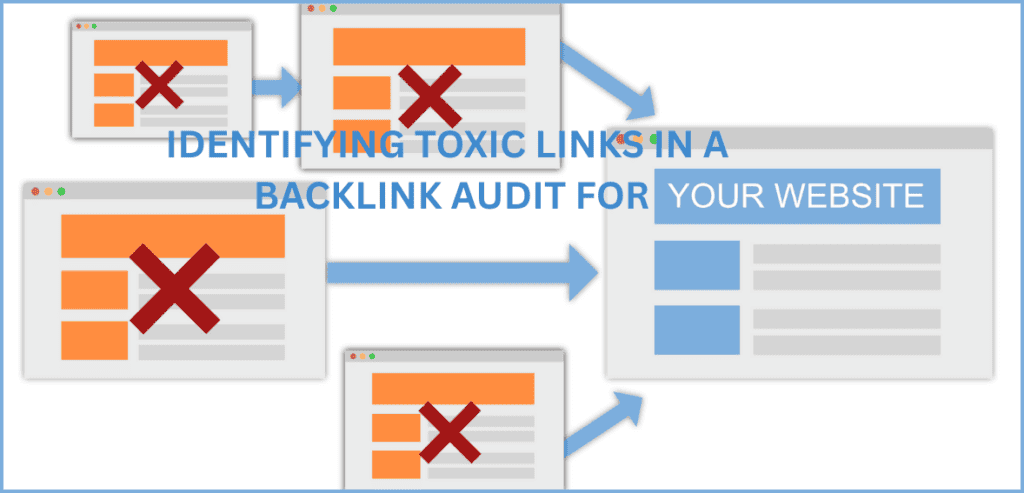
Toxic backlinks are the most significant danger that gets revealed during a backlink audit for your website. Typical sources for these types of links generally consist of spamming networks and link farms (websites set up with many links pointing towards each other). Domains that are approaching are being penalized (i.e., a heavily penalized site will never receive any more authority).
There are many links, including those considered toxic, which may be linked to adult sites, gambling sites, or sites displaying viruses, malware, etc. You may have never linked to any of these types of sites intentionally, but they could still impact your site negatively by reducing its authority and, thus, its ownership status.
A good quality backlink review should segregate toxic/suspicious links into three categories based on several different quality indicators. Using only one metric cannot be relied upon. In the course of an audit of a website’s link profile, the recording of toxic links is a step that will help in the future during outreach or disavowal. The removal of poisonous links helps in the creation of a stronger backlink audit for your site profile and in ranking protection against algorithmic and manual penalties.
Analyzing Link Velocity in a Backlink Audit for Your Site
Link velocity is the term that indicates how fast a website receives backlinks, and it is one of the main factors that determine the outcome of a backlink audit for your site. The sudden increase or decrease in link velocity may be a sign of unnatural activity.
A proper SEO audit of backlinks needs to check the history of backlink gain trends over a period of time. Natural link gain usually takes place in a period of time that is determined by the release of content or marketing campaigns, and it is a continuous pattern.
The backlink analysis should report unusual increases in links, particularly from domains that are classified as low-quality. It might be an indication of negative SEO attacks or the use of automated link building.
A thorough audit of the link profile of a website can easily separate the organic growth from the suspicious actions. Knowing the link velocity helps to ensure that your backlink profile is in harmony with the natural SEO patterns and that it does not provoke search engine scrutiny.
Comparing Competitors in a Backlink Audit for Your Site
By revealing the gaps and opportunities, competitor analysis increases the importance of a backlink audit for your site. Analyzing competitors helps to set the standards for link quality and acquisition strategies.
An extensive SEO backlink audit measures domain authority, referring domains, and anchor usage against the competitors with the highest rankings.
The process of backlink analysis determines websites that are linking to your competitors but not to you. These domains often indicate possible outreach opportunities.
A competitor analysis can reveal new strategies for link-building if the old ways of linking are not just imitated but understood. The reasons why competitors get links should be known, and the content or partnerships that are similar to theirs should be value-driven.
Deciding Whether to Remove or Disavow Links in a Backlink Audit for Your Site
Not all bad links need to be acted upon immediately, but determining which ones to discard is an important step of the backlink audit for your site. The idea is to reduce the risk without over-adjusting.
A meticulous SEO backlink audit gives first place to manual removal of obviously harmful links. Reaching out to webmasters can fix the problems before they become serious.
The disavow files are used in the backlink analysis process only when it is really necessary. Disavowing is a way of telling search engines to overlook certain links rather than eliminating them.
A careful link profile audit of the website prevents the aggressive disavowing that can lead to the loss of link equity. The strategic decision-making assures that the cleanup efforts are in line with the long-term SEO performance.
Monitoring Results After a Backlink Audit for Your Site
A backlink audit for your site is not complete just after the cleanup. Continuous monitoring will make sure that the improvements are not just for a while but also that the risks to the site are controlled.
The solid SEO backlink audit strategy will need monthly or quarterly reviews of new backlinks and anchor text patterns. The backlink analysis procedure will monitor the changes in ranking, the trend in traffic, and the crawling activities after changes. It is important to be patient as the improvements may take time.
Website link profile audits that are done repeatedly will not only be a means to prevent future problems but also to maintain authority. By constant checking, backlink auditing turns out to be a proactive SEO strategy to double the traffic and not just a reactive solution.
Automating the Backlink Audit for Your Site Process
Automation is the wing of efficiency for backlink audit on your site, particularly for big websites. In any case, the manual inspection still plays a very crucial role, but automation cuts down the total time of the process significantly.
A lot of SEO backlink audit tools send notifications for toxic links, anchor alterations, and sudden increases in links as their features. By making use of scheduled reports, the decent backlink analysis process is able to quickly identify and highlight anomalies.
Automated website link profile audit workflows help in reducing the burden of the audit process without losing control over it. Making use of both automation and human judgment will lead you to accurate results without compromising on the issue of scalability.
Conclusion
A backlink audit for your site is a necessary step to securing rankings, enhancing the site’s authority, and keeping the SEO healthy for a long time. Backlinks are one of the factors that determine the search engines’ evaluation of trust, relevance, and credibility. Thus, regular audits become a strategic necessity.
SEO backlink audit exposes harmful links, over-optimized anchors, and unnatural patterns in a structured way before they deteriorate the site’s visibility. Moreover, the process of backlink analysis reveals the strengths that you can build upon.
A clean website link profile audit will keep businesses free from penalties and help them to strengthen their competitive positioning and create sustainable link growth. The consistent auditing changes the game in backlink management, making it a proactive SEO advantage rather than a reactive task.
FAQs
What is a backlink audit for your site?
A backlink audit for your website is a detailed examination of all backlinks that lead to your site, revealing the link’s quality, pinpointing the ones that may cause harm, and evaluating the ones that may cause harm.
Why is an SEO backlink audit important?
The SEO backlink audit not only enables you to recover your website from penalties but also grants you a higher ranking as well as an assurance that your link profile is in line with search engine rules.
How often should you perform a backlink audit for your site?
A backlink audit for your site is suggested to be conducted every 3-6 months or after major ranking drops or link-building activities.
What tools are used in the backlink analysis process?
Software can be employed for the backlink analysis purpose; in this backdrop, four of them include Google Search Console, Ahrefs, Semrush, and Moz.
What happens after a website link profile audit?
After disavowing or removing harmful links, the process also involves quality link building, which will be used to direct future SEO strategies during the audit of the website’s link profile.