
By Rinki Pandey December 15, 2025
Backlinks are still among the top factors that affect one’s position in search engine optimization, no matter what. When they are generated organically, they signal to the search engine that the site is trusted, relevant, and has authority. However, not every backlink will be a website’s benefit for growth. Some links are slowly moving from being useful to becoming detrimental, if not for the immediate warning. Therefore, it is crucial to locate the critical signals before a backlink turns harmful for your business, so that the rankings, brand credibility, and organic performance over the long term are protected.
The major search engines have significantly improved their ability to tell a link’s intent, its quality, and also the pattern of links. What was applicable a few years ago might now turn out to be a risk. A lot of companies stick to the old link-building methods without being aware of the negative impact in the long run. Even the best-intentioned backlinks might get their worth reduced due to the updates in algorithms, the change in content relevance, or the decline in the linking site’s quality. This paper discusses the indicators that point to backlink danger, outlines backlink risk analysis, and demonstrates how identifying critical signals before a backlink turns harmful helps maintain the link quality and resilient search visibility.
Why Backlinks Are Harmful Over Time and Reveal Critical Signals Before a Backlink Turns Harmful
Backlinks don’t turn toxic all at once, but rather little by little in most cases due to evolving search engine algorithms, altering website ownership, decreasing content quality, or changing link intent. A link that used to be relevant might later be on a low-quality domain or an over-optimized page.
The ranking of a backlink is very much dependent on its context. Search engines take into consideration the location of the link, the reason for its existence, and how it contributes to the overall link profile. When the indicators or signals change, links can become liabilities.
Identifying critical signals before a backlink turns harmful allows businesses to act preventively rather than react to penalties.
Why Backlinks Lose Value Over Time and Indicate Critical Signals Before a Backlink Turns Harmful
Backlinks are not a permanent type of asset. Their worth depends chiefly on the quality, relevance, and trust of the linking source. Over time, such factors can change. Search engine algorithms develop and improve all the time. Once effective techniques may later be regarded as outdated and fall under the new quality guidelines. The age factor linked to a backlink obtained years ago may not be qualified under the current standards. Identifying critical signals before a backlink turns harmful allows businesses to act preventively rather than react to penalties.
Changes in website ownership are another issue. The settings of the well-respected blogs may change, e.g., sold to an affiliate network or “low-quality content farm” aimed at making money through poor blog articles. Whenever this occurs, backlinks from those websites are no longer considered trustworthy.
Another point to consider is the decay of the content. The pages that were once giving informative content may become outdated, thin, or even too promotional. When the critical signals before a backlink turn harmful, links can become liabilities. The knowledge of the ways backlinks degrade allows companies to spot the signals that are critical to their business before the critical signals before a backlink turns harmful, rather than receiving it after their rankings have already dropped.
The Importance of Seo Link Quality and Detecting Critical Signals Before a Backlink Turns Harmful
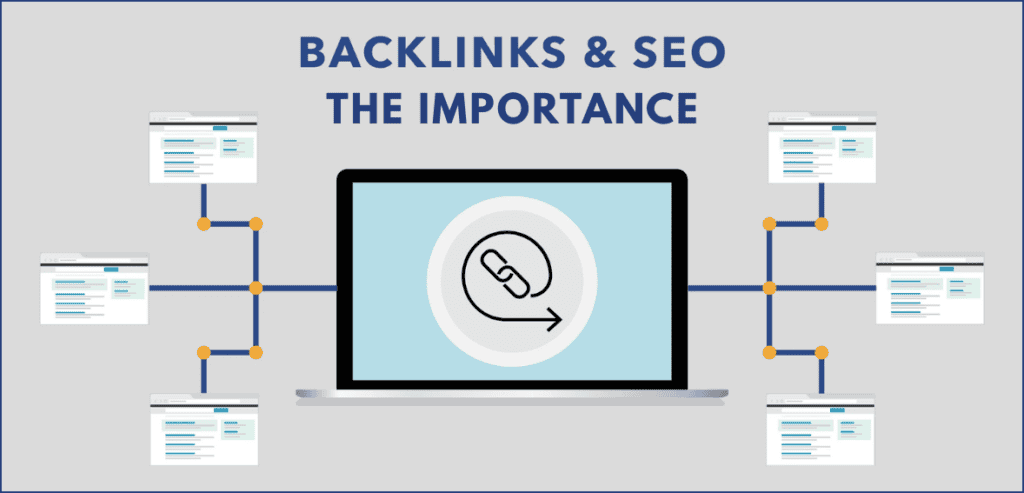
Trust, relevance, and editorial intent are the determining factors to double the traffic with SEO strategies of quality. High-quality backlinks are created naturally through useful content, not through deception. Search Engines evaluate hyperlinks in full context, including domain reputation, theme relevance, location/placement of hyperlink on the page, anchor text, and surrounding content. Essentially, a strong link profile should appear “natural” as well as comprise a diverse array of links.
Links of poor quality usually have similar characteristics. Among these are the use of the same anchor text, placement in areas of the web that have no connection with the subject, or links coming from sites that exist solely for the purpose of manipulating the search engines. Even a small quantity of such links can bring down the overall trust meter.
Being strict with the quality of seo links may result in stability in the ranking. It would also make the sites less susceptible to the changes in the algorithm. This makes identifying critical signals before a backlink turns harmful essential in modern seo strategies.
Critical Signals Before a Backlink Turns Harmful: Quality, Relevance, and Anchor Risks
A lot of negative backlinks do not result in instant penalties. Rather, they produce faint or adverse signals that gradually pile up. Early detection of these critical signals before a backlink turns harmful can prevent the damage from becoming permanent. One considerable sign of trouble is a decrease in the quality of referring domains. Recognizing critical signals before a backlink turns harmful prevents lasting damage.
Search engines may consider that a site that no longer attracts real visitors is of poor quality. A lack of relevance is another significant problem. A backlink from an unrelated industry raises doubts about the intent. A finance site that has been linked heavily from gaming or adult websites seems to be suspicious. Search engines anticipate contextual matching.
Anchor text patterns also indicate risk. Natural links have different and branded anchors. Bad backlinks often consist of exact-match keywords repeated across multiple domains. This certainly denotes manipulation.
Critical Signals Before a Backlink Turns Harmful: Placement, Growth Patterns, and Link Networks
Link placement is also an important aspect to consider. Editorial links that are incorporated into the text hold the highest credibility. Links that are hidden in footers, sidebars, or boilerplate parts are not so potent. When links are displayed all over the site without any context, they usually get a suspicious look. Moreover, sudden upsurges in backlinks must be analyzed thoroughly. Fast fast-increasing number of links without content promotion or media coverage indicates automation or buying of links.
On the other hand, natural backlink growth is gradual and content-driven. The outbound link activity of the referring domains is also a signal. Websites that excessively link to unrelated sites probably exist only to sell links. Being related to these link neighbourhoods lowers the quality of your SEO links.
Context changes should not be overlooked. There might still be a backlink, but the content around it could become low in quality or promotional. The value of the link decreases with the quality of the content. These patterns together form business-critical signals that a backlink might turn harmful. Continuous monitoring of these signals forms critical signals before a backlink turns harmful, and reduces the risk of penalties.
Impact of Toxic Backlinks Due to Ignoring Critical Signals Before a Backlink Turns Harmful
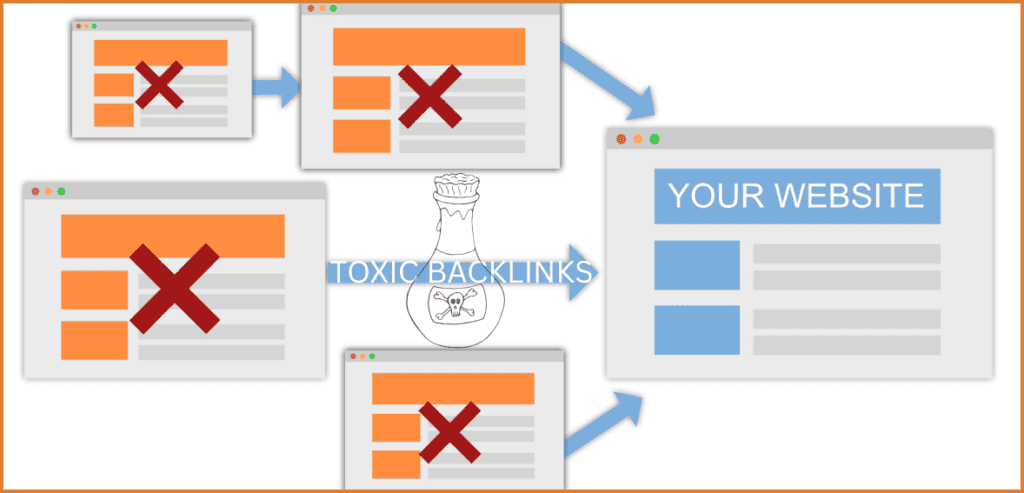
Toxic backlinks create a chain of negative effects that not only affect the rankings. The main impact is on the overall performance of the business. One of the main reasons for the traffic loss is the algorithms that lead to devaluation, which in turn complicates the identification of the issue. Manual penalties lead to sudden drops, and the site owner’s patience is then tested by the long cleanup process that has to be done afterward.
Low rankings mean less lead generation and less conversion. On the other hand, the company has to face the marketing costs, which are likely to be higher when there is less visibility. Brand trust could also be a victim if a site gets labelled as spammy just because it is coming from a bad source.
Recovery is not cheap. Backlink audits, outreach, and disavowal take a lot of time and often require a high level of skill. In rival industries, the lost rankings may not even come back completely. That is why it is vital to detect business-critical signals ahead of time, when a critical signal before a backlink turns harmful, as a priority for the whole business and not only as an SEO task.
Risk Analysis and Monitoring to Identify Critical Signals Before a Backlink Turns Harmful
The backlink risk analysis ought to be proactive. Waiting for the ranking drops is already too late and shouldn’t be the case.
The regular audits are of great help in obtaining the early identification of patterns. The changes in referring domains, anchor text imbalance, and link velocity spikes are examples of such patterns. The review of link context and placement provides deeper insight.
The traffic data of the referring domains is also very helpful. The healthy sites are the ones that attract users. The declining traffic is often a sign of declining authority.
The monitoring needs to be continuous and not one-time. The quarterly audits apply to most sites. However, the high-competition niches may require monthly reviews. The effective analysis of the critical signals before a backlink turns harmful not only protects the link quality but also ensures the long-term stability.
Prevention Strategy Focused on Critical Signals Before a Backlink Turns Harmful

Prevention policy is built on the principle of backlinking, that is, how the backlinks are earned. The editorial links from the pertinent and authoritative domains continue to be the most secure among all options available. The best technique is content-driven link building. The most attractive content, such as high-value guides, research, and tools, is the main reason why natural backlinks are generated. These links would not be damaged by the algorithm change, and they would still look trustworthy.
Outreach should be directed toward relevance and editorial judgment. Links placed without prior review have a greater risk of being removed. Automated campaigns and link exchanges should be avoided completely. Immediate action should be taken once the risky backlinks are detected. Removal of the links is the most preferred option.
In contrast, disavowal should be an option when removing the links isn’t possible. A good link profile consists of branded anchors, various sources, and steady growth. This tactic not only enhances trust signals but also secures the quality of SEO links.
Conclusion
Backlinks play a double role in a website’s digital presence, either as a strength or a weakness. The line between the two is marked by being proactive and taking the right steps. When a company gets a signal that the critical signals before a backlink turns harmful, the business can protect rankings, maintain SEO link quality, and avoid penalties. It can still do ranking protection, link quality maintenance, and even penalty avoidance.
Backlink risk analysis performed on a regular basis and relevance with editorial value as the main focus, the outcome that will be obtained will be that the backlinks will always live on as an authority rather than a risk. In the realm of search optimization, prevention has always been and will always be the most effective method over recovery. This forward-looking method not only gives support to the long-term visibility but also builds resilience against the algorithm and facilitates businesses in scaling their organic growth without the fear of sudden ranking losses or incurring cleanup costs.
FAQs
What are toxic backlinks?
Toxic backlinks are the ones that are considered to be of low quality or irrelevant by the search engine, and also suggest manipulation.
How often should backlink risk analysis be done?
A quarterly review is advised, along with monthly checks for high-competition websites.
Can good backlinks become harmful later?
Absolutely, the variation in the quality of the domain or content can alter the status of the previously good links to bad ones.
Is it necessary to disavow all bad links?
Not at all, just the links that indicate strong risk signals are those that should be removed or disavowed.
How does SEO link quality affect long-term rankings?
A strong SEO link quality not only creates trust but also provides stability and makes the site less affected by algorithm updates, before the critical signals before a backlink turns harmful.